
THE CRITICAL IMPORTANCE OF MANGROVES TO THE REEF
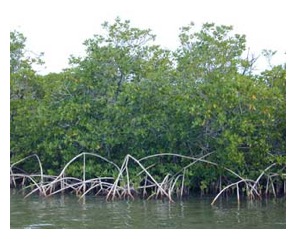
Mangrove forests are critically important to the health of the reef. According to the World Wildlife Fund, the mangrove forests conservatively provide goods and services worth of $186,000,000 both to the marine environment and to communities that rely on the sea.
The World Wildlife Fund reports:
* Fisheries: Mangrove forests are home to a large variety of fish, crab, shrimp, and mollusk species. These fisheries form an essential source of food for thousands of coastal communities around the world. The forests also serve as nurseries for many fish species, including coral reef fish. A study on the Mesoamerican reef, for example, showed that there are as many as 25 times more fish of some species on reefs close to mangrove areas than in areas where mangroves have been cut down. This makes mangrove forests vitally important to coral reef and commercial fisheries as well.
* Protection against Sediment and Hurricanes: The dense root systems of mangrove forests trap sediments flowing down rivers and off the land. This helps stabilizes the coastline and prevents erosion from waves and storms. In areas where mangroves have been cleared, coastal damage from hurricanes and typhoons is much more severe. By filtering out sediments, the forests also protect coral reefs and seagrass meadows from being smothered in sediment.
* Timber and plant products: Mangrove wood is resistant to rot and insects, making it extremely valuable. Many coastal and indigenous communities rely on this wood for construction material as well as for fuel. These communities also collect medicinal plants from mangrove ecosystems and use mangrove leaves as animal fodder. Recently, the forests have also been commercially harvested for pulp, wood chip, and charcoal production.